
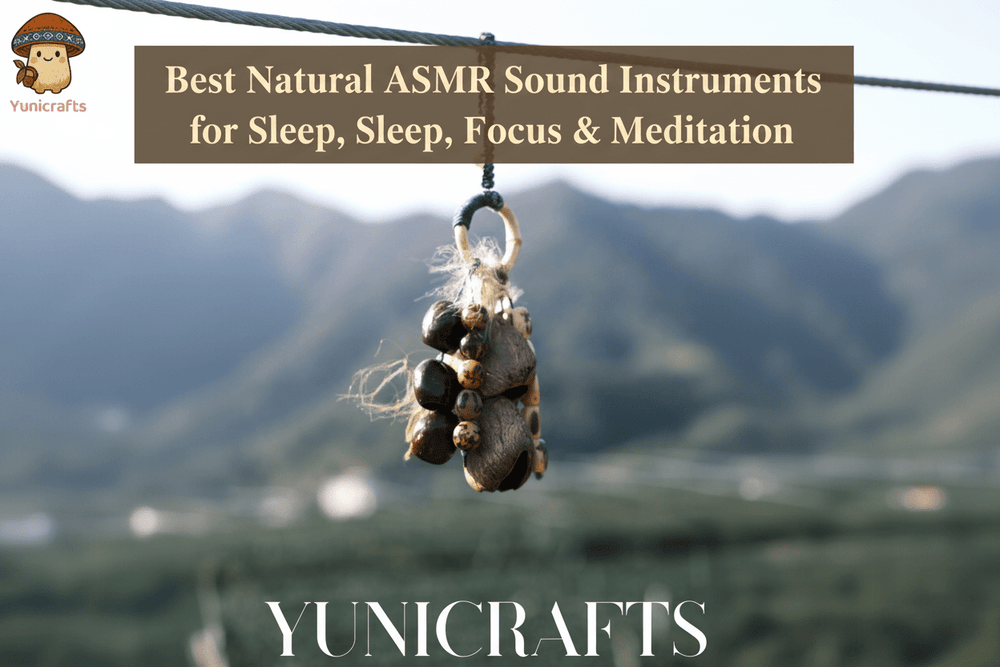
Natural ASMR sound tools—seed shakers, soft shell chimes, ocean drums, bamboo chimes, and handmade rustling objects—create tiny variations that the ear can follow without feeling overstimulated. They are simple, tactile, and imperfect in the best way. For sleep, they can soften the edge of a quiet room. For focus, they can create a gentle sound boundary. For meditation, they can give the mind a natural anchor.
This guide compares the best natural ASMR instruments for sleep, focus, and meditation, with practical suggestions for recording them at home and choosing the right sound for your nervous system.
Why Natural ASMR Sounds Feel Different from Digital White Noise
Digital white noise is usually steady and mathematically consistent. It masks background sound by filling the frequency spectrum with an even blanket. Natural sounds behave differently. A seed pod does not strike the same way twice. A shell chime responds to air pressure, distance, hand movement, and room acoustics. An ocean drum shifts from soft sand-like friction to larger wave-like rolls depending on angle and speed.
That subtle unpredictability is part of the appeal. Research in environmental psychology has often linked natural soundscapes with perceived restoration and stress reduction. In a 2021 systematic review published in Proceedings of the National Academy of Sciences, natural sounds were associated with benefits for health and positive affect. The mechanism is not “magic”; it is attention. Natural sounds provide enough detail to gently engage the brain without demanding a hard response.
Natural variation matters
Many people on TikTok, YouTube Shorts, and ASMR communities describe a preference for “real texture”: wood taps, seed clicks, shell brushing, fabric rustle, and close-mic hand movement. These sounds are not sterile. They carry the timing of a person’s hand, the friction of natural materials, and the tiny acoustic irregularities that make a recording feel close and human.
For sleep, that can mean less mental effort. For focus, it can create a low-stakes rhythm. For meditation, it can help you return to the present moment whenever the mind drifts.
Best Natural ASMR Instruments for Sleep, Focus & Meditation
The best ASMR sound tools are not always the loudest or most complex. The most useful instruments for relaxation often have three qualities: low volume, soft transients, and repeatable movement. Below are four natural sound healing instruments, each with a different listening personality.
Moonin — Best for Close Listening

Moonin is best for listeners who enjoy close, detailed texture. Its seed-shell sound is dry, crisp, and intimate—more like a quiet forest rattle than a bright percussion instrument. Used slowly, it creates a fine clicking pattern that works well for close-mic ASMR, breath-led meditation, and short focus resets.
For sleep, Moonin is most effective when played very softly and irregularly. Try short movements: lift, pause, tilt, pause. The silence between sounds is part of the relaxation.
Salin — Best for Soft Layered Rustling

Salin has a softer, more layered sound than many seed shakers. Where a sharper rattle may feel percussive, Salin leans toward rustle: small elements moving together, overlapping, and fading naturally. This makes it one of the best natural ASMR instruments for people who want texture without harsh attack.
In a meditation setting, it can support slow breathing: one small movement on the inhale, stillness on the exhale, or the reverse if that feels more calming.
Ocean Drum — Best for Water-Like Sound

An ocean drum is ideal when you want a broader, more immersive sound. Instead of tiny seed clicks, it creates the feeling of water moving across a surface. Tilt it slowly and it sounds like shoreline foam. Move it more fully and it becomes a rolling wave.
For meditation, the ocean drum works well at the beginning of a session because it quickly changes the atmosphere of a room without needing melody or rhythm.
Seed Hand Bell — Best for Ambient Room Texture

A seed hand bell is less about direct performance and more about atmosphere. Compared with metal chimes, seed chimes are typically warmer, drier, and less piercing. For focus, this kind of intermittent sound can help make a workspace feel calm without becoming the main event.
Other Handmade ASMR Sound Objects Worth Trying
Not every ASMR sound has to come from a formal instrument. Many beloved handmade ASMR sound objects are simple natural materials: dried leaves, woven baskets, seed pods, bamboo pieces, shells, smooth stones, paper, linen, and untreated wood. The key is to choose materials with a gentle frequency profile. If a sound feels sharp, glassy, or startling in the room, it will usually feel even sharper in headphones.
For beginners, seed shakers and ocean drums are easier to control than many found objects. A handmade natural instrument also gives your recording a visual identity, which matters on social platforms where viewers often decide within seconds whether a sound feels trustworthy, cozy, or worth saving.
How to Record Natural ASMR at Home
You do not need a studio to record natural ASMR, but you do need quiet, patience, and controlled movement. The goal is not volume. The goal is detail.
- Choose the quietest room and soften reflections. Record away from refrigerators, traffic-facing windows, and computer fans. Curtains, rugs, bedding, and bookshelves help reduce harsh reflections.
- Place the microphone close, but not too close. For seed shaker ASMR, start 6–12 inches from the microphone. For an ocean drum, a little distance often works better because the sound needs space to develop.
- Record soft movements first. Most beginners play too loudly. Start at half the volume you think you need. Natural ASMR instruments usually sound better when the listener feels invited in rather than pushed back.
- Leave silence in the recording. Silence helps the nervous system settle. Short pauses make the next rustle or roll feel more intentional.
- Use simple editing. Remove obvious bumps, normalize gently, and avoid heavy noise reduction if it creates a watery digital artifact. The charm of natural ASMR is the real texture. Preserve it.
How to Choose the Right Natural ASMR Instrument
If your goal is sleep, choose the softest and least surprising sound: Salin, a gentle seed hand bell, or a slow ocean drum. If your goal is focus, choose a sound with light structure, such as Moonin in short intervals or a seed chime in the room. If your goal is meditation, choose the instrument that makes it easiest to return to breathing: ocean drum for spaciousness, seed shaker for detail, hand bell for atmosphere.
At Yunicrafts, we focus on natural instruments and handmade sound objects because they invite slower listening. They are not meant to replace medical treatment, sleep hygiene, or therapy. But as part of a calming ritual—dim light, slower breath, a quieter phone, and a tactile sound—they can help create the conditions for rest.
The best instrument is the one you will actually use gently and consistently. Natural ASMR works best when it becomes a ritual, not a performance.
FAQ: Natural ASMR Instruments for Sleep, Focus & Meditation
-
Natural ASMR instruments are sound tools made from organic or tactile materials such as seeds, shells, wood, bamboo, gourds, or fabric. They create soft textures like rustling, tapping, rolling, brushing, or water-like movement for sleep, focus, meditation, and relaxation.
-
Neither is universally better. Digital white noise is consistent and useful for masking background sound. Natural sounds for sleep often feel more organic because they include small variations, pauses, and textures. Many people prefer natural ASMR when they want a calmer, more human listening experience.
-
A soft seed shaker is usually the easiest starting point because it responds well to small hand movements and does not require musical training. Salin is good for gentle rustling, while Moonin is better for close, detailed seed shaker ASMR.
-
Sound healing instruments can support focus by creating a calm sound boundary and reducing the feeling of silence or distraction. Short sessions with a seed shaker, ocean drum, or ambient seed hand bell can work well before deep work or study.
-
Use a quiet room, soften echoes with fabric, keep the microphone close but not overloaded, play more softly than you think, and leave natural pauses. Avoid over-editing. The most professional natural ASMR recordings usually preserve real texture rather than turning it into a flat digital loop.


