
Ocean sounds are among the oldest meditation companions humans know. Long before apps, playlists, or studio sound baths, people listened to waves arrive and recede. The rhythm is simple, cyclical, and nonverbal: water comes in, water moves out, the body follows. An ocean drum meditation guide brings that ancient listening pattern into a room, using a handheld percussion instrument to create wave-like movement for relaxation, visualization, and guided sound journeys.
An ocean drum is especially useful because it can sound wide without being loud. Its rolling beads create a soft natural sound therapy texture that can support body scanning, sleep meditation, children's relaxation, and one-on-one sound healing sessions. Research on natural sound environments suggests that nature-based acoustic textures can influence attention and stress relief (Scientific Reports, 2017). Sound meditation research has also explored how intentional listening practices may support mood and relaxation (Goldsby et al., 2017). An ocean drum is not a medical treatment, but it can become a gentle tool for helping attention move from mental noise into sensory awareness — supporting mindfulness meditation and anxiety relief through focused listening.

What Is Ocean Drum Meditation?
Ocean drum meditation is a guided listening practice that uses the wave-like sound of an ocean drum to support relaxation, visualization, body awareness, and sound journeys. Instead of asking the mind to become still immediately, the practitioner listens to waves forming, rising, softening, and fading. This makes it one of the most accessible entry points into mindfulness meditation and natural sound therapy — no prior experience required.
This makes the ocean drum different from sharper rhythm instruments. It does not need a beat to be useful. Its strength is atmosphere. The sound can act like a shoreline: a place where attention repeatedly returns. If you want the basic mechanics of the instrument, start with Yunicrafts’ foundation article, What Is an Ocean Drum and How Does It Create the Sound of Waves?. This guide focuses on how to use an ocean drum in meditation practice.
Meet Daughter of the Sea: Design and Sound Character
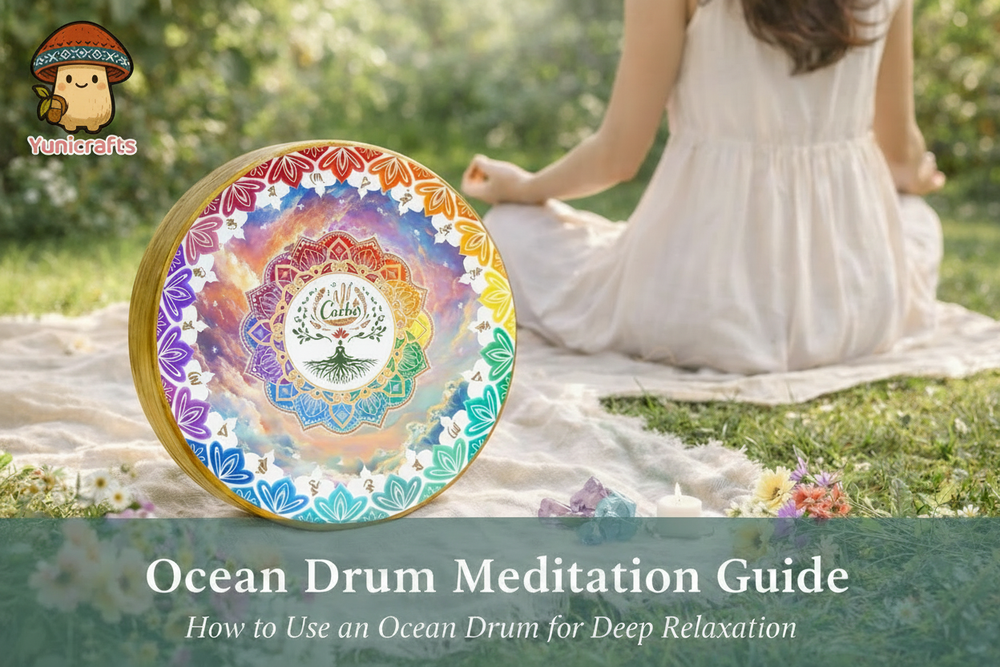
The Ocean Drum - Daughter of the Sea is a handheld percussion instrument designed for ASMR, meditation, and sound healing. Its visual language already suggests water, but the real value is in the way the internal beads move across the drum surface. When held horizontally and tilted slowly, the sound becomes a broad wash of waves. When moved more actively, it can resemble rising surf or a stormier shoreline. When tapped gently, the drum adds a low resonance beneath the water texture.
For meditation, this range matters. A single instrument can create three different roles: a quiet opening atmosphere, a deeper sound journey layer, and a closing cue that brings people back to the room. The ocean drum bridges the gap between nature sounds and intentional practice — familiar like water, yet controllable enough for guided sound bath work and one-on-one sessions.
Listen: the Daughter of the Sea ocean drum recreating the sound of real ocean waves.
Basic Ocean Drum Techniques for Meditation
The best ocean drum technique is usually the simplest one. Keep your movements slow, listen closely, and let silence remain part of the practice. The goal is not to perform waves dramatically; it is to support the listener’s breath, body awareness, and inner imagery — the foundation of effective mindfulness meditation.
Gentle Horizontal Tilt for Low Tide
Hold the drum level with both hands. Slowly tilt one side down so the beads roll across the surface. This creates a soft, receding wave that feels like low tide pulling away from the shore. Use this technique at the beginning of meditation, during sleep meditation guidance, or whenever the room needs to settle.
Faster Circular Motion for Rising Waves
Move the drum in a small circular pattern to create a fuller wave. Keep the motion controlled. A little speed can suggest a rising tide or an emotional swell, but too much movement can feel startling. Use this technique in the middle of a sound journey when you want the listener to feel immersed in the natural sound therapy experience.
Soft Hand Taps for Low Resonance
With one hand supporting the frame, lightly tap the drumhead with the other hand. The tap adds a low, body-like pulse beneath the water sound. This is useful during body scans because the resonance helps the listener feel grounded rather than floating too far into imagery.

A 15-Minute Ocean Drum Guided Meditation Script
The following script can be used for one-on-one sessions, small groups, yoga nidra openings, or personal practice. Read it slowly. Leave space between sentences. Let the ocean drum speak more than you do.
Opening: Arriving at the Shore - 2 Minutes
Begin with the drum still. Invite the listener to sit or lie down comfortably. Say: Let your body feel supported. Let the breath arrive without needing to change it. Tilt the ocean drum once, very slowly. Continue: Imagine you are standing at the edge of a quiet shore. The water is not asking anything from you. It simply arrives, softens, and returns.
Use two or three gentle tilts with long pauses. Ask the listener to notice the contact points of the body: feet, legs, back, shoulders, hands, and head. The opening should feel spacious, not busy.
Deepening: Body Scan with the Waves - 10 Minutes
Use a slow wave sound for each body area. Say: As the next wave arrives, bring awareness to the forehead and eyes. As the wave recedes, let the face soften. Tilt the drum and pause. Move gradually through the jaw, throat, shoulders, chest, belly, hips, legs, and feet.
For the shoulders and chest, add a very soft hand tap before the wave. This gives the body a grounding signal. Say: Let the wave move through the shoulders. You do not need to carry the whole ocean. Let the water take one layer of effort with it.
In the middle of the scan, use a slightly fuller circular motion for 20 to 30 seconds. Say: If thoughts appear, let them become small shells at the edge of the water. You do not need to pick them up. The tide can move around them. Then return to slow tilts. This contrast gives the session a natural arc: arrival, immersion, softening.
Closing: Returning to the Shore - 3 Minutes
Gradually make the ocean drum quieter. Say: The waves are becoming more distant now. The shoreline is still here, but your awareness begins to return to the room. Leave a long silence. Invite the listener to feel the floor, the air, and the natural breath.
End with one final gentle tilt. Say: One last wave arrives, and one last wave returns. Bring small movements into the fingers and toes. When you are ready, open the eyes and come back to the present moment.
When to Use Ocean Drum Meditation
Ocean drum sound healing is most effective when the environment allows slow listening. It can work in personal meditation, but it is especially strong when someone is guiding another person or group through a sensory journey. Its gentle nature sounds quality makes it ideal for stress relief and anxiety relief in both clinical and home settings.
- One-on-one sound healing: Use slow waves to support body scans and emotional decompression.
- Group meditation and sound baths: Let the ocean drum create a shared atmosphere before silence.
- Sleep meditation: Keep the volume low and the movement repetitive for bedtime wind-down.
- Children’s relaxation: Use short ocean imagery and avoid dramatic volume changes.
- Yoga nidra: Place wave sounds between verbal cues to deepen rest.
- Mindfulness meditation: Use as a single-point anchor for breath and body awareness.
For trauma-sensitive spaces, children’s sessions, or people who may feel overwhelmed by immersive sound, keep the volume gentle and ask for feedback. The ocean should feel like a supportive horizon, not a force pushing into the body.
Combining Ocean Drum with Seed Shaker and Hand Bell
The ocean drum works beautifully with smaller natural instruments when each one has a clear role. Think of the ocean drum as the main atmosphere, the seed shaker as texture, and the hand bell as a beginning or ending cue — together forming a complete sound bath toolkit.
- Ocean Drum: creates the wide wave field and immersive sound journey.
- Seed Shaker: adds earthy rhythm, grounding, and subtle movement.
- Hand Bell: marks transitions, openings, and endings with airy clarity.
For a full comparison of these roles, read Ocean Drum vs Seed Shaker vs Hand Bell. If you are building a complete healing room or yoga studio setup, continue to Sound Bath Setup Ideas. This article also pairs naturally with the previous practical guides on rainstick breathwork and seed hand bell meditation.
Watch: Ocean Drum layered with seed shaker, hand bell, and other natural instruments in a live sound healing session.
Ocean Drum vs Bamboo Stream Drum: Which Water Sound Fits Your Practice?
Both ocean drums and bamboo stream drums belong to the wider family of water-inspired natural sound therapy tools, but they do different jobs. The ocean drum feels spacious and cinematic. The bamboo stream drum feels more intimate and continuous, like flowing water close to the body.
| Instrument | Sound Character | Best For | Meditation Role |
|---|---|---|---|
| Ocean Drum Daughter of the Sea | Wide waves, rolling sea texture, immersive movement | Sound journeys, sleep meditation, group sound baths | Creates the main ocean atmosphere |
| Handcrafted Bamboo Stream Drum | Flowing water, stream-like motion, gentle continuity | Mindfulness, room ambience, yoga, close listening | Creates a softer flowing-water layer |
If your practice is about deep imagery and a sense of open space, choose the ocean drum. If your practice is about quiet continuity and small flowing textures, a bamboo stream drum may be more suitable. Some practitioners use both: ocean drum for the large emotional arc, stream drum for the quiet integration afterward.
FAQ: Ocean Drum Meditation
What are the benefits of ocean drum meditation?
Ocean drum meditation supports stress relief, anxiety relief, and deep relaxation by using slow, wave-like natural sounds to shift attention away from mental noise. Regular practice can help with sleep meditation, body awareness, emotional regulation, and creating a grounded mindfulness state. It is also widely used in sound healing and sound bath settings for its broad, immersive acoustic quality.
How do you use an ocean drum for meditation?
Hold the ocean drum horizontally, tilt it slowly, and let the internal beads create a wave-like sound. Use the sound as an anchor for breathing, visualization, body scanning, or guided relaxation. Start with gentle tilts and long pauses — the quieter the movement, the more meditative the effect.
Is an ocean drum good for sound healing?
An ocean drum is highly effective for sound healing because it creates a broad, natural water texture that supports relaxation and imagery. It works especially well for openings, transitions, body scans, and sleep-focused sessions. Its non-percussive quality makes it accessible for people who find sharper instruments overstimulating, and it pairs naturally with other instruments in a sound bath setting.
What is the difference between an ocean drum and a rainstick?
An ocean drum creates wide, rolling wave sounds by moving beads across a drum surface. A rainstick creates a falling rain texture as small particles move through an internal channel. Ocean drums feel more spacious and are better for immersive sound journeys; rainsticks are better for breath pacing and shorter transitions. Read our rainstick breathwork guide for a deeper comparison.
Can ocean drum meditation help with sleep?
Ocean drum sleep meditation can support a bedtime routine when used gently. Slow, repetitive wave sounds may help attention move away from thought loops and toward body sensation, supporting natural stress relief before sleep. Keep the volume soft and the movement predictable — avoid dramatic tilts or sudden changes in pace near bedtime.
How long should an ocean drum meditation last?
A simple ocean drum meditation can last five minutes. A guided body scan or sound journey often works well at 15 to 20 minutes, with a clear opening, deeper middle section, and quiet closing. Beginners may find 8 to 10 minutes a comfortable starting point before extending the session.
Explore next: Use the ocean drum as a shoreline, not a performance. Let each wave arrive, soften, and return. The practice begins when the listener realizes they do not need to hold the sea — they only need to hear it.
Explore Featured Instruments


Continue Reading


