
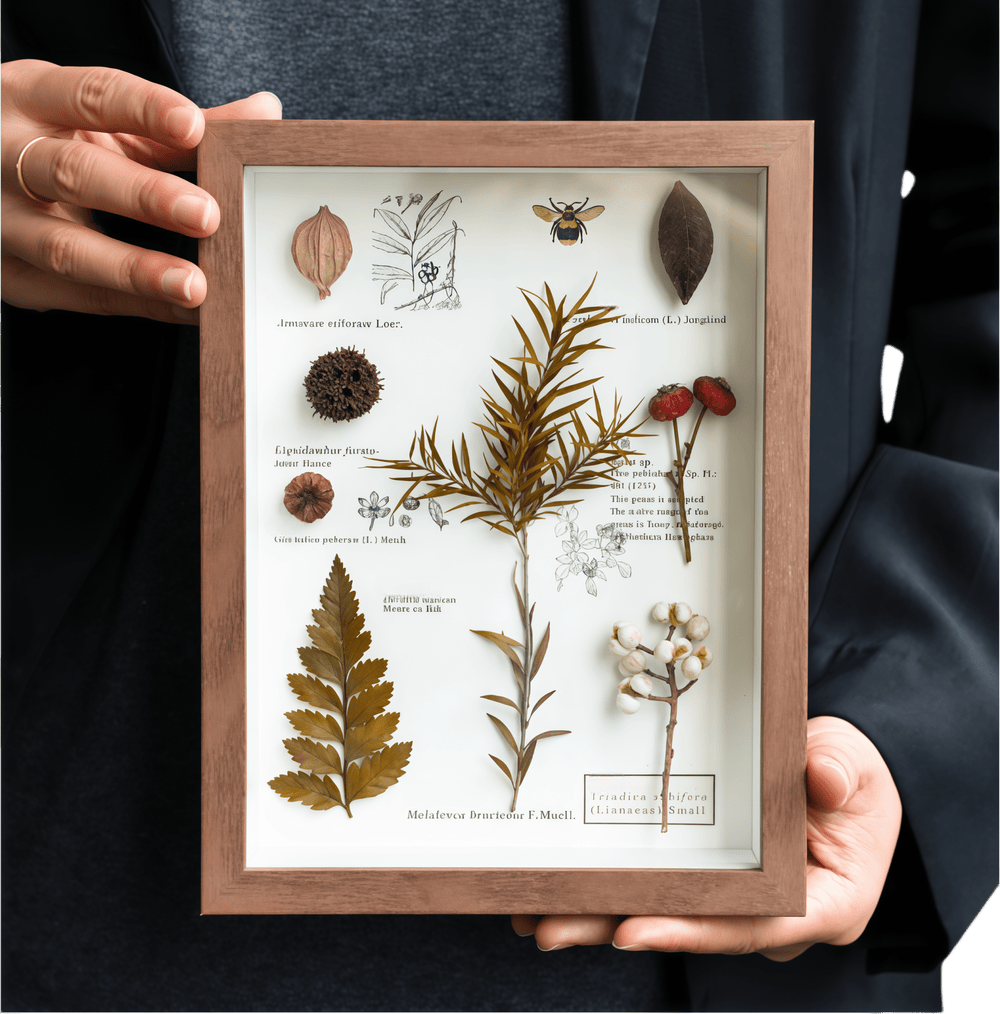
A stairway is one of the most visible transitional spaces in a home, but it is also one of the easiest to overfill. People pass through it quickly, view it from several angles, and need enough clearance for hands, shoulders, light, and everyday movement. The strongest natural stairway decor ideas use a measured rhythm rather than a crowded gallery: one material story, a clear sightline, and enough wall left quiet for the architecture to show.
Before choosing a frame, walk the stairs at different times of day. Notice where the eye naturally pauses, where the ceiling line changes, and whether the wall is seen from the entry, living room, or upper landing. A calm plan might be one vertical botanical anchor, a compact pair on a landing, or a short sequence that follows the slope without trying to fill every step.

1. Read the stairway as a moving sightline
A wall above stairs is not viewed from one fixed position. It is seen while entering the room, climbing, descending, and looking back toward the landing. Start by standing at each of those points and mark the areas that remain visible. The Botanist's Journal pressed flower frame can work as a single anchor when the wall already has strong trim, a patterned runner, or a changing ceiling height.
Use a paper template before making any holes. Move it up and down until the frame relates to the handrail and does not look stranded between two corners. A stairway should feel easy to use first. Keep displays clear of handrails, light switches, vents, door trim, and any place where a shoulder or bag could brush the frame.
2. Match the format to the shape of the wall
Long stair walls can make a small frame disappear, while a narrow landing can make a deep shadow box feel heavy. Choose the format after measuring the usable wall, not the full wall. The table below is a practical starting point for deciding whether the arrangement needs height, width, or restraint.
| Wall situation | Useful format | What it contributes | Fit check |
|---|---|---|---|
| Long wall following the stairs | Short vertical sequence | Creates rhythm without filling every step | Keep spacing consistent and clear of the handrail |
| Small upper landing | One compact horizontal frame | Settles the eye at the turn | Leave corners and door trim visible |
| Tall wall beside a low landing | One vertical botanical frame | Adds height with a clear center | Check the top edge from both floors |
| Open stair visible from a living room | Light pair with related tones | Connects two rooms without a full gallery | View the pair from the main living-room sightline |

3. Use the landing as a pause, not a storage zone
If the stairway has a landing, treat it as a visual pause between floors. A small frame or a single sculptural object can give that turn a sense of arrival. The Micro Landscape Frame offers a low horizontal direction for a landing wall, especially when the surrounding doors, trim, and floor pattern already provide enough visual structure.
Avoid turning the landing into a catch-all. Boxes, baskets, and temporary bags quickly compete with the artwork and can create a trip risk. If storage is genuinely needed, solve it with a stable piece of furniture first, then add one decorative layer. The natural mudroom guide is useful when the staircase connects directly to a busy drop zone.
4. Add depth only where clearance allows it
A deeper framed format can help a flat stair wall feel more tactile, but depth matters more beside stairs than it does above a sofa. The botanical specimen shadow box can serve as a vertical anchor on a broad landing wall, provided the fixing point is appropriate for the wall and the object. Keep the front edge away from the walking line and do not let it project into the path of shoulders, sleeves, or carried items.

Make a cardboard mock-up with the real depth, not only the front dimensions. Ask another person to walk past while you observe the clearance from the side. In a home with children or pets, choose a secure installation point and keep fragile decorative objects outside an easy knocking zone.
5. Let one darker texture mark the change of floor
When every frame is pale, a long stair wall can lose definition. One darker textured piece can mark the transition without turning the wall into a separate theme. The Rainforest Seed Vault specimen frame can sit at a landing or beside lighter botanical art when the space needs contrast.

Keep the material description precise. Seeds, pods, leaves, and flowers shown in framed pieces are preserved decorative materials only. They are not presented for planting, eating, medicine, religious practice, luck, or guaranteed effects. Choose the piece for its silhouette, color, scale, and relationship to the architecture.
6. Follow the slope without forcing a perfect diagonal
A sequence of frames can echo the direction of the stairs, but a perfectly rising diagonal is not always the calmest choice. Begin with the largest piece near the landing or the strongest sightline, then add quieter companions only if the wall still needs them. Keep the top and bottom margins intentional so the arrangement does not appear to slide into the trim.
Lay the frames on the floor and photograph them from the lower stair, upper stair, and adjacent room. If the sequence looks busy in any one view, remove one piece. The Blick gallery-wall planning guide is useful for paper templates and spacing, while the natural gallery-wall guide can help compare a stair sequence with a more settled wall arrangement.
7. Use sound only beyond the main traffic line
A sound sculpture can suit a stairway that opens to a sheltered porch, balcony, or quiet upper landing, but it should not hang where a person climbing with laundry could catch it. The Fruit Bell Harp vertical seed sound sculpture is better considered in a stable area with gentle air movement and enough clearance from doors, railings, and hands.
Check how sound travels between floors before installing anything that moves. In a compact home, the best choice may be a still decorative frame using the same natural material tone. For nearby room connections, the natural console table guide can help carry a frame color toward the entry, while the natural sofa-wall guide can help keep the living-room sightline related to the stair display.

Lighting, hanging, and care checks
Check the light at both ends
Stair lighting changes as people move, so check the arrangement in daylight and under the evening fixture. Avoid placing a frame where glare hides the detail or where a bulb creates harsh heat. If the display needs a light, use a properly installed fixture and keep cables out of the walking path.
Check the fixing point
Use appropriate hardware for the wall type and the actual object weight. A secure hanger is more important on a stairway because a loose frame can fall into a route that people use frequently. Do not attach decorative objects to a handrail or use the rail as a substitute for a rated fixing point.
Check light exposure and handling
Framed botanical and paper-based materials should be kept away from harsh direct sun, damp areas, heat, and repeated touching. The Library of Congress guidance on matting and framing explains why light exposure can cause fading, discoloration, and embrittlement over time. Use soft dry dusting at home and follow the care information supplied with the specific piece. For another design comparison, recent coverage on intentional wall decor reinforces the value of editing rather than filling every surface.
The final test is simple: can someone climb, turn, carry something, and see the next step without negotiating the decor? If yes, the stairway is working as architecture and as a calm visual transition. Natural stairway decor should support movement, respect the handrail and light, and make the change between floors feel considered rather than crowded.


