
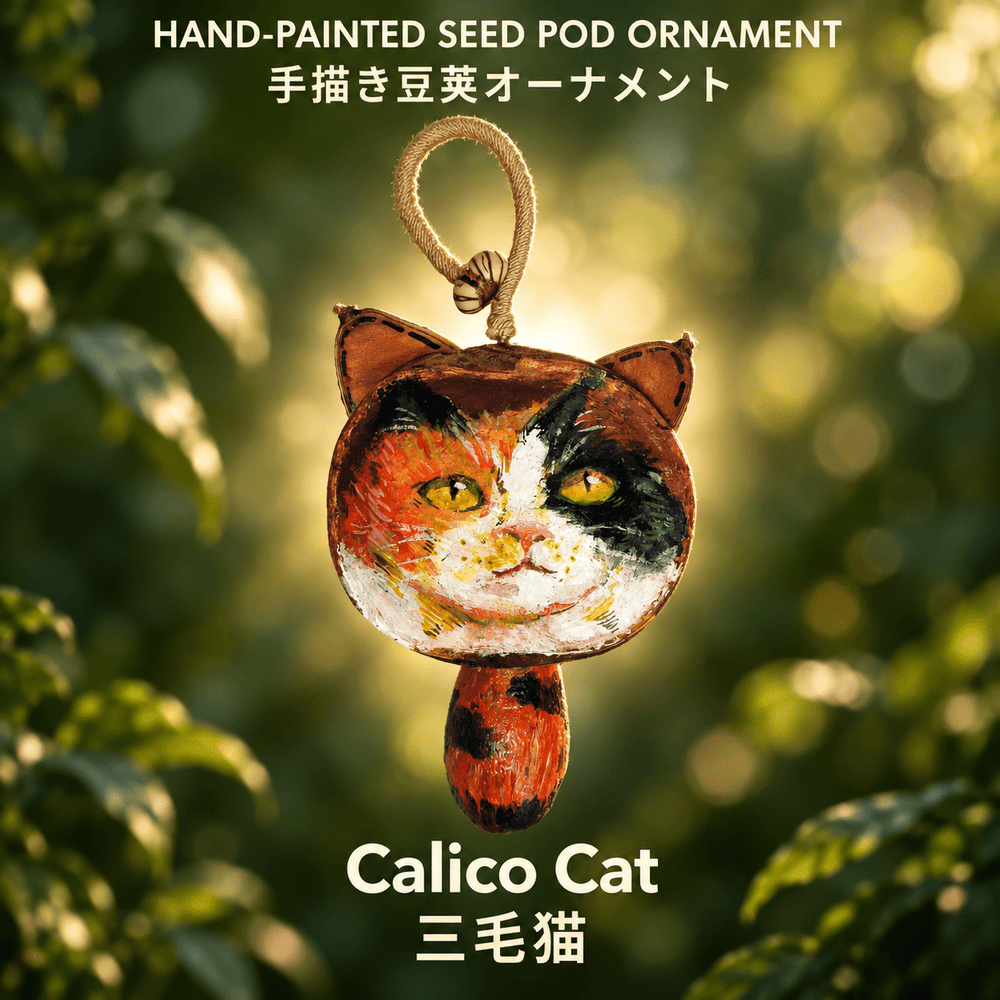
If your sister calls her cat “the one with the crooked white moustache,” a perfectly symmetrical black-and-white face might not be the gift you think it is. The useful question isn't just “What color is the cat?” It's “What makes this cat recognizable across the room?” Start with a clear photo, pick the marking you'd miss most, and look for that before comparing ribbons, frames or beads. A ready-made ornament works when the broad markings tell the story. If the crooked moustache is the whole point, choose a photo or a custom portrait.

Choose a reference photo that shows the cat’s face
You don't need a studio portrait. Look through the pictures the person has already shared with you. The best one for shopping may be the least dramatic: both eyes visible, the chin out from under the chest, and enough light to tell where a patch ends. A sleeping cat curled into a cinnamon roll makes a lovely card, but it tells you very little about what the front of a hanging portrait ought to look like.
If you can take a fresh picture, let the cat choose a comfortable place. Crouch to its level near a window and wait for it to look your way. The Kentucky Humane Society's guide to photographing pets makes a useful point about framing: fill the picture with the face instead of trying to recover it later with digital zoom. For this purpose you can put the phone away once you have the shot; the cat doesn't need to hold a pose.

No clear photo and hoping to keep the gift a surprise? Ask someone in the household to describe the face without naming the color. If all you know is “a brown cat,” choose a general cat-themed gift instead of promising a likeness. With a clear reference, shrink the picture until it's about the size of a thumbnail. Which feature survives: a bright chin, an orange patch over one eye, or three dark lines crossing a pale forehead? Look at the product picture at roughly the same size. If you need to zoom in to find the one detail that matters, it may disappear when the ornament is hanging up.
Read the face before you read the label
Write a description short enough to fit on a gift tag. “Brown stripes, white chin” is more useful than “short-haired.” “Black face, one white cheek” tells you more than a breed guess. The illustrated identification guide from Alley Cat Allies separates a cat's overall coat from features such as a blaze or a white locket. In a gift note you can skip the technical term: “the white line between her eyes” describes the detail just as well.
Open just one product photo first. Find the marking in the left column, open the design in the middle, then use the last column to decide if it belongs on your shortlist. Compare the big areas of color: Are there separate patches, narrow lines, or one broad dark area broken by white? The Cat Fanciers' Association's coat descriptions distinguish color from pattern. An orange cat can have stripes, and a striped cat can also have a white bib. You're choosing an image, not establishing a pedigree. If the catalog label seems wrong but the face looks familiar, trust the face for this decision.
| What stands out in the photo? | Which design to open first | What could rule it out? |
|---|---|---|
| Orange and black in separate areas, with white between them | Calico: compare the division across the forehead and cheeks. | The patch that makes this cat distinctive is missing from the painted side. |
| A dark mask with a bright muzzle or bib | Tuxedo: trace the white area from nose to chin. | The real cat's face is mostly white but the painting reads mostly black. |
| Dark lines across a brown forehead | Tabby: look for the direction of the cheek stripes as well as the base color. | A large decorative frame catches your eye before the stripes do. |
| A particular marking matters more than the general pattern | Compare a custom-portrait service with using the actual photo. | A stock design can't promise that individual marking. |
Compare the painted design, not just the word “cat”
On the calico seed-pod ornament, orange, black and white share a small face, and a painted tail hangs below it. That extra shape makes this design worth opening if a tail is part of the cat's familiar outline. If the orange patch in your photo is what matters instead, ignore the tail for a moment. Compare the two faces straight on before deciding that three matching colors add up to a likeness.
The framed tabby ornament looks more like a tiny framed portrait. A square brown border gives the painted stripes a definite edge. Someone who likes miniature pictures may love the little frame; someone looking for a cat-shaped silhouette may barely notice the stripes behind it. Cover the border on your screen with two fingers and then uncover it. Which version felt more like the gift you had in mind?

For a black-and-white cat, the tuxedo design has a dark face, a light muzzle and a gold-toned outline. Its teal bead is part of the design, not a claim about the cat's eyes. That distinction also helps when comparing the listings side by side: the trim is what will match the recipient's taste; the painted face is what will remind them of the animal.
Check what you're buying and where it will hang
These three listings describe finished, hand-painted seed-pod ornaments. You're selecting a pictured design rather than commissioning someone to paint the photo in your hand. Treat these photos as examples of each design, not a promise about the shape of the individual seed pod or the exact position of a brushstroke. Don't assume the particular piece shown will be shipped or that you can ask for a different eye color at checkout. For the difference between choosing a design and leaving the selection open, see our guide to named and assorted gift designs.
Before choosing a spot, ask for the portrait width, the length from the top of the loop to the lowest detail, and the clear opening of the loop. The listing photo lets you compare shapes. It cannot tell you whether that loop will clear the knob on your own cabinet. A loop can be long enough for a hook but too narrow to pass over the knob you had in mind. Use the shop's contact page if the measurements you need aren't listed. If there isn't an answer in time, leave the precise spot undecided rather than promising a fit.

Once you have those measurements, cut a piece of scrap card to the width and height of the painted part and add a string loop. If the design has a dangling tail, tape on a strip of paper for it so your stand-in reaches the same lowest point. Try the stand-in at the proposed spot before hanging the actual ornament. If a cabinet door opens into a wall or the dangling end bumps the shelf, choose a fixed hook instead. Pick a location out of a pet's reach. This is a decorative keepsake for the person, not something to tie to the cat or leave out as a plaything.
Make a close match feel personal without calling it custom
A ready-made design can be exactly right when the intention is a shared joke or a familiar little face. Put a copy of the cat photo in the card, and write what made you choose the ornament. “I picked this one for the little orange patch over Pepper’s left eye” does more than a paragraph about how special the gift is. There's no reason to imply the maker worked from that photo. If you're buying for someone who enjoys making things themselves, our finished gift versus craft kit comparison helps distinguish the pleasure of opening a finished piece from the pleasure of making one.

Sometimes the right answer is to leave the ornament in the shop. A friend whose two tabbies looked almost identical may care deeply about the one small patch that told them apart. A printed photograph in a simple frame can say more than a close-but-not-quite painting. If you look elsewhere for a commission, check whether the artist works from your photo and whether you'll see a proof before the piece is made; those are questions, not features of these ready-made ornaments.
For someone who has already chosen a seed-pod piece, our ornament care guide is a useful note to pass along after the gift is opened. If what the recipient enjoys is playing a small instrument rather than displaying a portrait, consider a hand bell instead: Shop the sound. For the cat lover, come back to the photograph. If you can point to the marking that made you smile, you know why you're choosing this one.


