
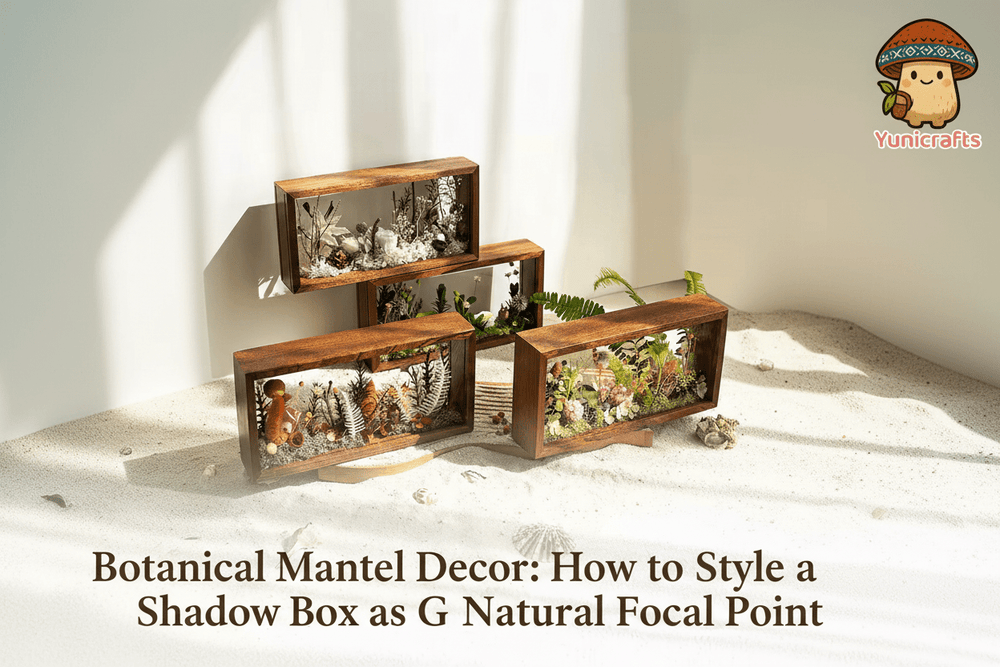
A mantel looks most settled when it holds a few objects with different heights, textures, and breathing room—not a row of matching things.
Botanical mantel decor brings an organic focal point to a room without requiring fresh flowers each week. A shadow box works especially well because it adds depth while remaining visually quiet. Use this guide to choose scale, layer a real botanical piece with restraint, and care for it in a high-visibility part of the home.


Why a Botanical Shadow Box Works on a Mantel
A mantel is often the first horizontal surface the eye meets. A shadow box adds a frame, a tactile layer, and a contained composition, so it can read as collected rather than cluttered. Unlike a loose arrangement, it gives preserved seeds and botanicals a clear boundary—helpful when the room already has books, ceramics, or a mirror.

Choose the Right Shadow Box Size and Orientation
Start with the width of the mantel, not the wall. A single substantial piece can anchor a narrow shelf; a pair of smaller frames suits a longer one. Leave visible wall around the artwork. The Botanical Shadow Box Size Guide explains how A4, A3, and panoramic proportions read in different spaces.
For a specimen-led focal point, Nature’s Cabinet Botanical Specimen Shadow Box offers a structured, cabinet-of-curiosities look that pairs naturally with wood, stone, and warm metal.
Use the Three-Layer Mantel Formula
- Back layer: begin with a mirror, artwork, or a taller botanical shadow box.
- Middle layer: add one low, grounded object such as a small ceramic vessel or a short stack of books.
- Front layer: finish with one small, moveable accent. Keep the front layer lower than the art.
The aim is variation, not symmetry. If the shadow box has fine detail, let it be the quiet center and avoid competing patterns immediately beside it.
Match Materials Without Making Everything Brown
Echo one tone from the shadow box—warm wood, mossy green, creamy paper, or dark seed texture—rather than matching every material. Matte ceramics, aged brass, linen, and unfinished wood can provide contrast without overpowering natural specimens. In a painted room, a pale stone or clear glass accent can keep the display light.

Care and Placement: Protect Botanical Art from Heat and Light
Keep preserved botanical art away from direct fireplace heat, smoke, steam, and prolonged direct sunlight. If the fireplace is used, place the shadow box on an adjacent wall or shelf rather than directly above the heat source. Dust the frame with a soft dry cloth; do not spray the glass or introduce moisture near natural materials.

Extend the Look Beyond the Mantel
Repeat one botanical note elsewhere—a single framed fern on a shelf or a small specimen on a gallery wall—to make the room feel connected. For layouts that combine several pieces, see How to Style a Botanical Shadow Box on a Gallery Wall.
Shop the Look: Botanical Shadow Boxes for Your Mantel

“My Unique Rose” Preserved Flower Shadow Box
From $39.99
Explore
“The Landscape Garden” Real Flower Shadow Box
$19.99
Explore
“Micro Landscape Frame” Preserved Flower Mini Garden Shadow Box
$39.99
Explore
“Nature’s Cabinet” Botanical Specimen Shadow Box
From $49.99
Explore
“The Grand Herbarium” Pressed Fern Flower Art
$89.99
Explore
“The Rainforest Seed Vault” Tropical Specimen Shadow Box
From $29.99
ExploreFAQ: Botanical Mantel Decor
Can I put a shadow box above a working fireplace?
It is better to avoid a position exposed to heat, soot, or rising warm air. Choose an adjacent wall or a mantel used only decoratively.
How many objects should sit beside a botanical shadow box?
Two or three supporting objects are usually enough. Keep the art as the visual anchor.
Do botanical shadow boxes suit modern interiors?
Yes. Use a simpler palette and fewer accessories so the frame and natural texture provide the interest.
Keep Exploring: More Botanical Styling Guides

Botanical Shadow Box Size Guide: A4 vs A3 vs Panoramic
Read More
How to Style a Botanical Shadow Box on a Gallery Wall
Read More
How to Choose a Botanical Shadow Box for Your Space?
Read MoreCreate a focal point with real natural detail.
Explore handcrafted frames that bring a collected, nature-led note to a shelf or mantel.
Explore botanical shadow boxes

